


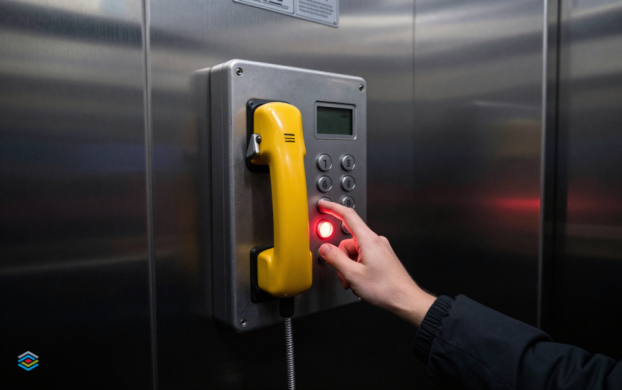
For decades, Plain Old Telephone Service (POTS) lines quietly powered the systems that keep buildings safe—fire alarms, elevator phones, security panels, and emergency call boxes. That quiet reliability is coming to an end. Copper POTS lines are being decommissioned at an accelerating pace nationwide, and many organizations won’t know their emergency systems are compromised until it’s too late.
Cellular emergency communication is stepping in to fill the gap—and it’s doing more than just replacing copper. It’s raising the bar for what “reliable” actually means.
The Copper Cutoff Is Already Underway
Telecom carriers have been direct about their priorities: maintaining thousands of miles of aging copper infrastructure no longer makes financial or strategic sense. So the lines are coming down, in waves, across the country.
The bigger problem isn’t the shutdown itself—it’s that most organizations never see it coming. Discontinuation notices get lost in the shuffle: a letter tossed with junk mail, an email that never gets opened, a line-item buried in a billing statement. Too often, the first sign of trouble is a life-safety device that fails to connect during an actual emergency. By then, there’s no time left to fix it.
Any building still leaning on legacy POTS-dependent systems is sitting on borrowed time.
Why Cellular Is Becoming the New Standard
Cellular emergency lines solve the core weakness of copper: invisibility. A POTS line gives you no indication of its own health—it works until, suddenly, it doesn’t. Cellular gateways flip that equation by actively monitoring themselves.
You’ll know before it fails
Cellular systems send real-time alerts the moment a connection drops or a device needs attention. No more discovering a dead line only when an alarm doesn’t sound.
Power outages won’t take you offline
Copper used to carry its own power, but that guarantee is gone—many carriers have shifted to VoIP-based replacements that don’t. Cellular emergency devices close that gap with built-in 24-hour battery backup, keeping alarms, elevators, and safety systems running through extended outages. In a real emergency, that backup window can be the difference that saves a life.
Lower cost, faster scale
Cellular deployment skips the expense and delay of maintaining or installing hardline copper. Organizations can roll out new lines quickly, at lower cost, while staying compliant with current emergency communication standards.
Modernizing Isn’t Optional Anymore
This isn’t a passing trend—it’s a permanent shift in how buildings stay connected during emergencies. As copper disappears, cellular is becoming the most dependable option left standing, offering:
- Higher overall reliability
- Real-time visibility into line health
- Backup power during outages
- Fast, simple installation
- Full compliance with emergency communication standards
Don’t Wait for the Line to Go Dead
The safest time to switch is before an outage forces your hand. Get a FREE POTS Replacement Assessment from My Resource Partners. We work with the nation’s leading providers, so you get top-tier service at wholesale pricing—through our national wholesale network, our clients save 35% versus going direct.